Post an Insurance Payment (Single Patient)
Posting insurance payments opens a different view of the New Transactions window.
Payments entered in the Multi-Claim Insurance Transaction window post to the patient’s specific insurance ledger, rather than the copay ledger, allowing you to easily track payments received from one or more insurance companies. Below are steps on posting an insurance payment to a single patient.
- If you utilize TopsPay to process payments, the New Transactions window also can be used to process insurance credit card payments. Please reference the article at the bottom of this email for more information on processing an insurance card through TopsPay.
- The New Transactions window for a multi-claim insurance payment also allows you to post a single insurance payment that includes amounts across multiple patients. Please reference the article at the bottom of this page about multi-patient insurance payments.
On This Page
Insurance Check Payments and Direct Deposit
Insurance Credit Card Payments
Make a Mistake? No Need to Click the Cancel Button
Matching a Payment to a Claim or Insurance Ledger
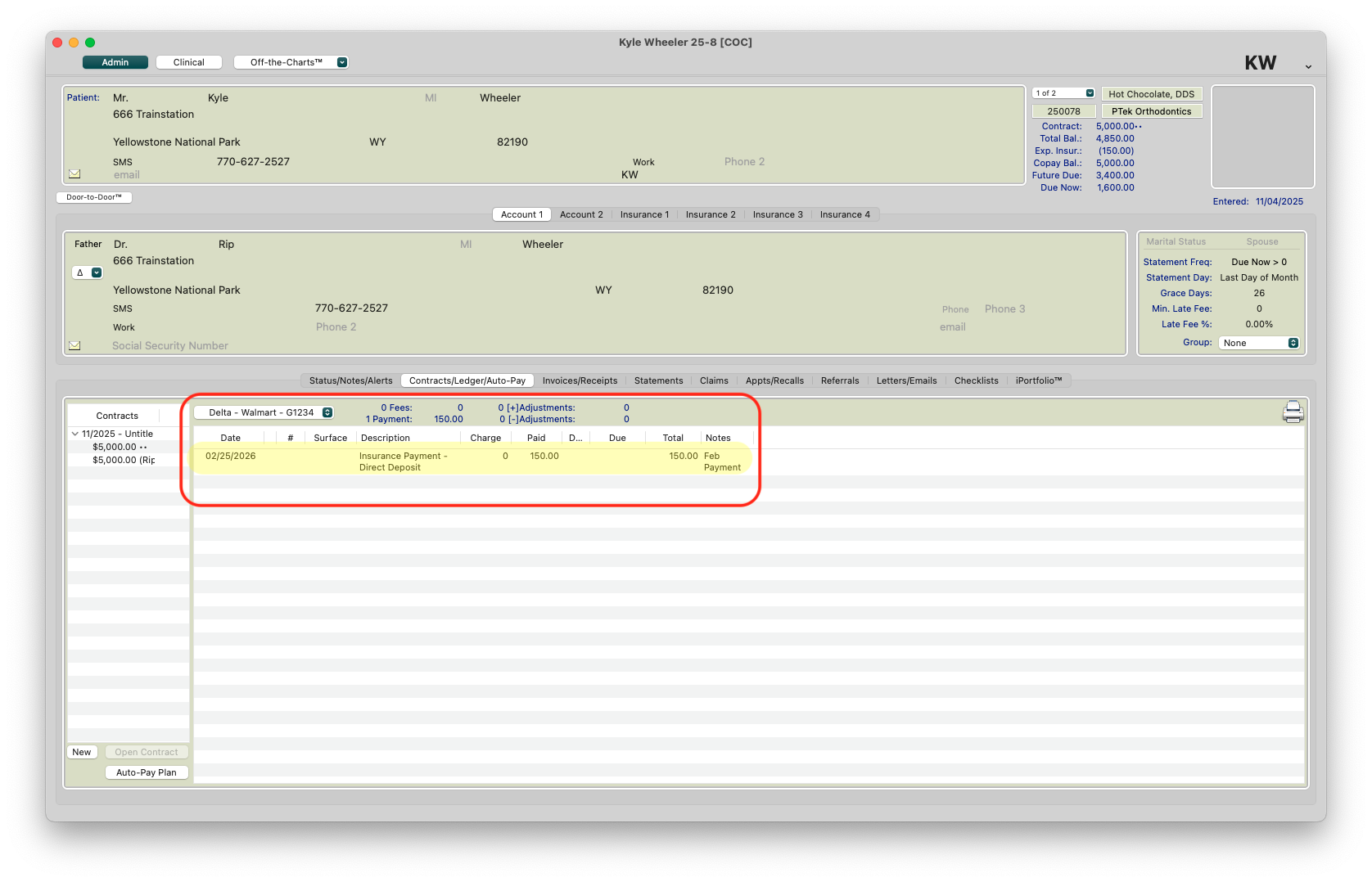
Viewing Insurance Payments on Patient Ledgers
Insurance Check Payments and Direct Deposit:
- Open the patient chart.
- Open the Transaction Window (Command T or Action > New Transaction).
- For the Fee/Payment Type, select Insurance Payment - Check or Insurance Payment - Direct Deposit.
- In the window that opens up, you will be asked to enter the check total, the check number (not applicable for direct deposit), how much of the check should be applied to the patient, and notes. You will also need to select the claim to which you wish to attach the payment:

- Click Tab.
- Click Add Multi-Claim Insurance Transaction to Tops.
Insurance Credit Card Payments:
- Open the patient chart.
- Open the Transaction Window (Command T or Action > New Transaction).
- For the Fee/Payment Type, select Insurance Payment - Credit Card.
If you do not wish to run the Credit Card Insurance Payment through TopsPay, make sure to uncheck the "Use TopsPay" checkbox on the bottom right of the Transaction Window!
See related article below about how to enter an Insurance Credit Card Payment in TopsPay.
- In the window that opens up, you will be asked to enter the payment total, how much of the payment should be applied to the patient, and notes. You will also need to select the claim to which you wish to attach the payment. Make sure to uncheck "Use TopsPay" if necessary.

- Click Tab.
- Click Add Multi-Claim Insurance Transaction to Tops.
Make a mistake? No need to click the Cancel button!
It's common to make a mistake when you enter a multi-claim insurance payment in Tops. The good news is that you can remove a single claim entry without having to start all over again!
- Keep the New Transactions window open. In our example, you see that the amount for patient Remington was accidentally entered for $400 instead of $300.
- As a result, the total for the credit card payment at the top right does not match the Total Transaction Amount on the bottom right.
- Highlight the claim with the error.
- Go to Edit > Remove Claim.
- This will remove the claim from the list. Now you can re-add it with the correct information!

Matching a Payment to a Claim or Insurance Ledger
When matching an insurance payment to an existing claim, you may find that a patient has multiple dated claims - or no open claims at all. It is important to either match the payment to the associated claim or at least to the correct insurance ledger.
If Multiple Claims Exist
Review the EOB and confirm the date(s) of service being paid. Select the claim that matches the date of service listed on the payment.
If a single payment covers multiple dates of service, you have two options:
- Option 1: Enter each payment separately in the New Transactions window and match each payment to its corresponding claim.
- Option 2: Post the combined payment and match it to the oldest dated claim included in the payment. Add a Note to the transaction indicating which dates of service are covered.
After posting, manually close any remaining open claims that were paid.
If No Open Claims Exist
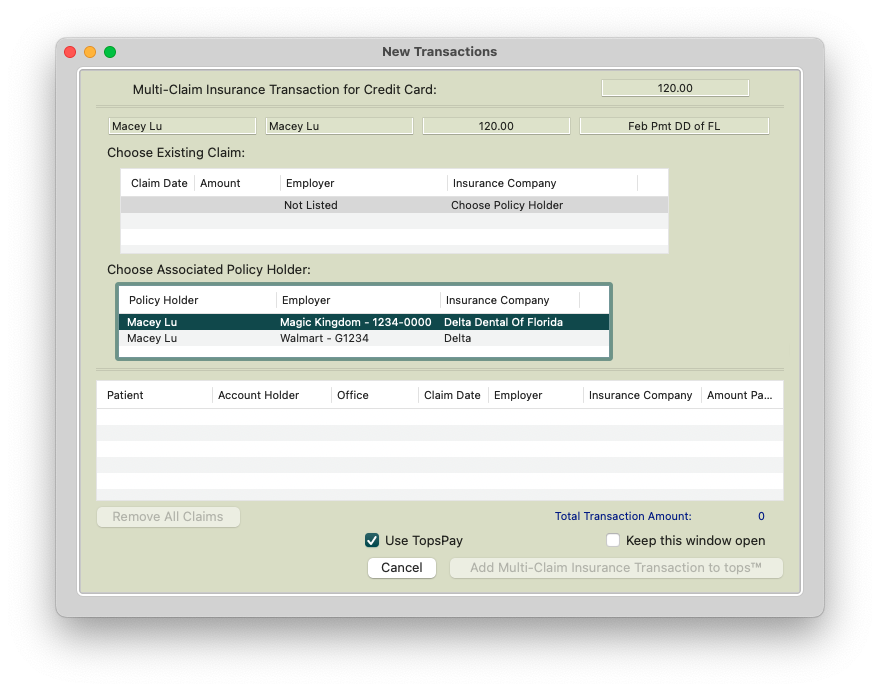
Select Claim Not Listed, then choose the correct insurance ledger to post the payment.

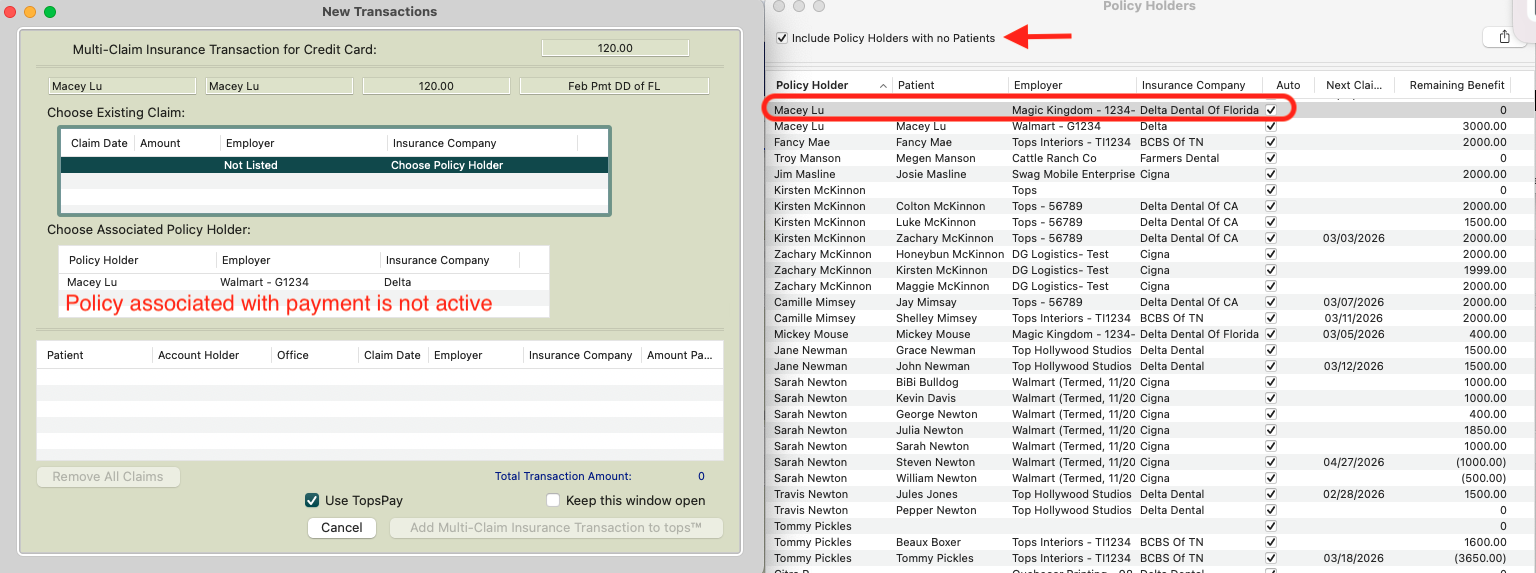
If the Insurance is No Longer Active on the Patient's Chart
If the patient no longer has the insurance active on their chart, the insurance company will not appear as an option.
To resolve this:
-
Search for the patient's previous policy holder and associated insurance. Matrix>Policy Holders (Check the box to view Policy Holders with no patient)
- Open the patient’s chart.
- Select an availabletab.
-
Search for the previous policy holder record associated with the payment.
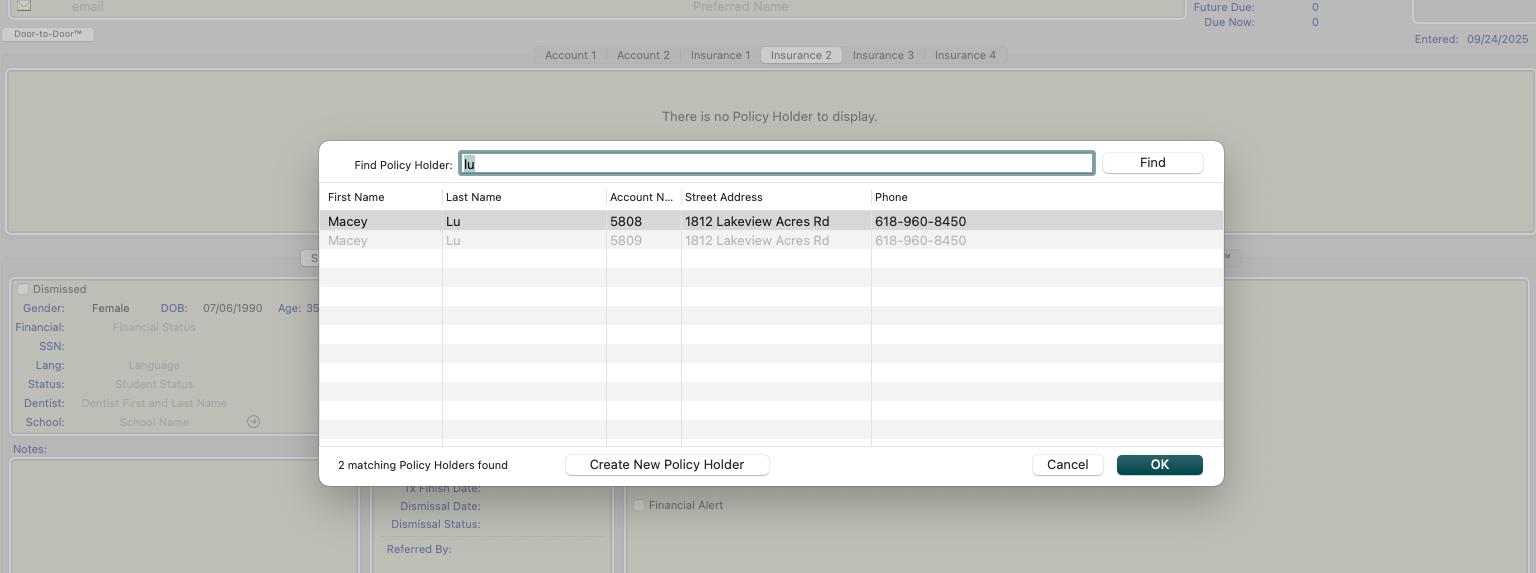
-
Temporarily add the policy holder back to the patient’s chart in an open Insurance tab.
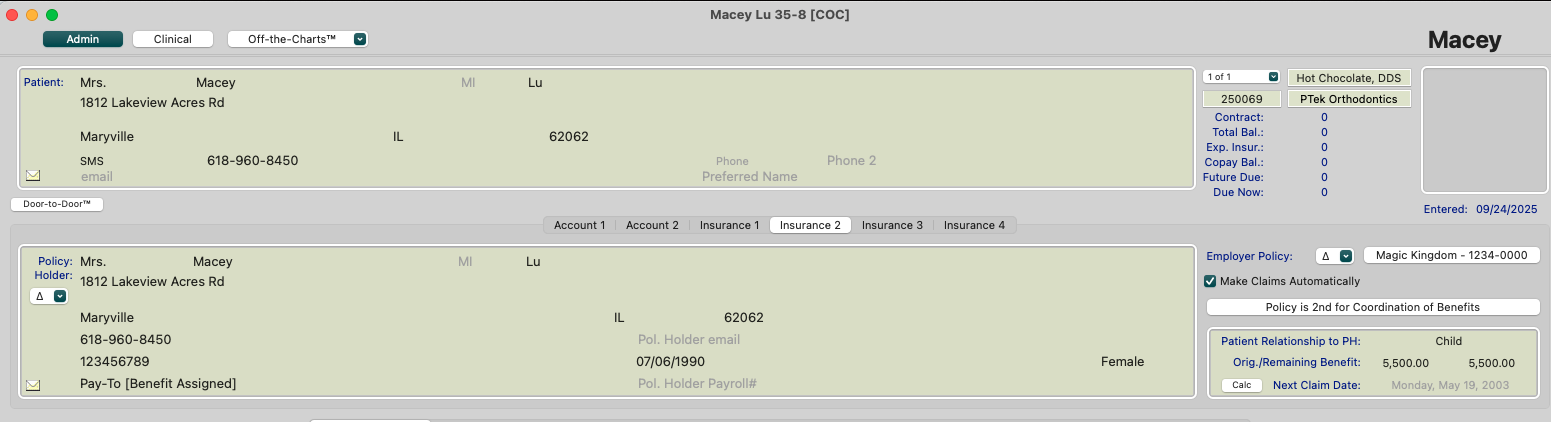
-
Return to the New Transactions window. The policy temporarily added to the patient's chart should now be visible. Select the policy to match the payment. Click Add Multi-Claim Insurance Transaction to tops.
-
Return to the patient's chart and clear the temporary policy holder record from the patient's chart.

Explain details through a Ledger Note
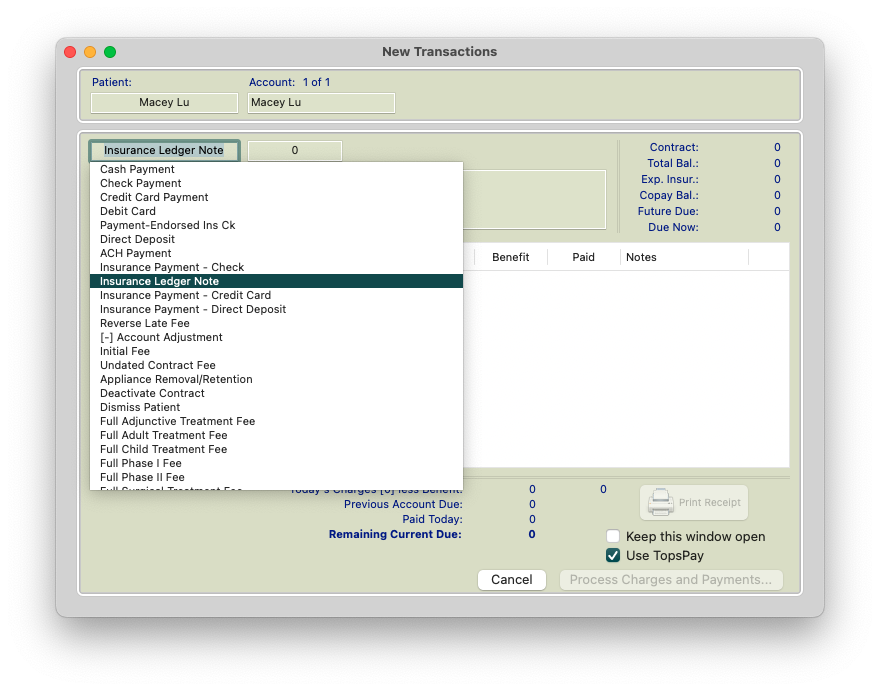
If details about a payment are needed to further explain insurance ledger activity, use the new transaction type, Insurance Ledger Note, to post the details.
- Open the New Transaction Window (Action>New Transaction or Command-T)
- Choose Insurance Ledger Note from the list of transactions
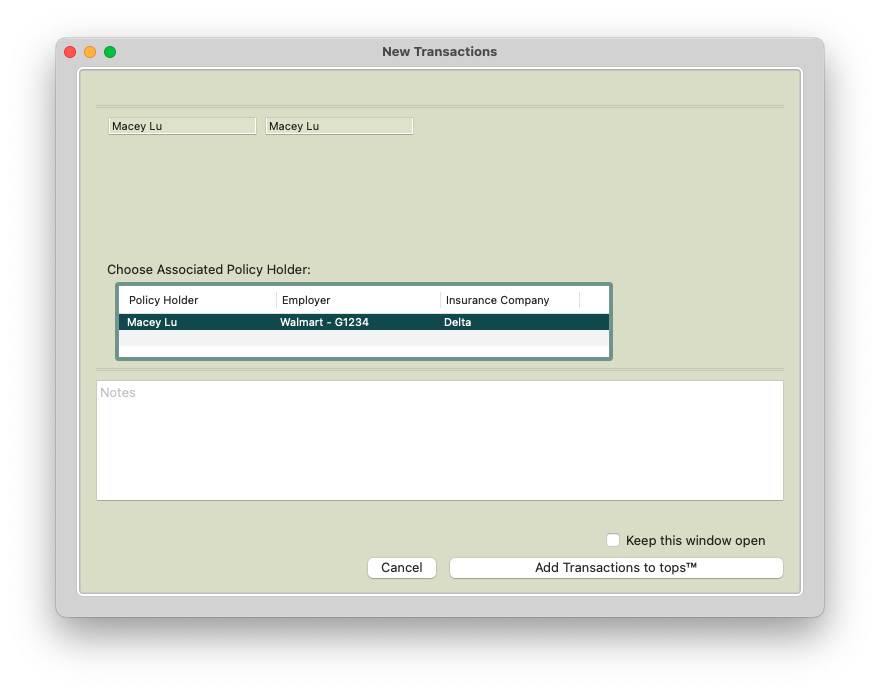
- Choose the associated Insurance Ledger to post the note.
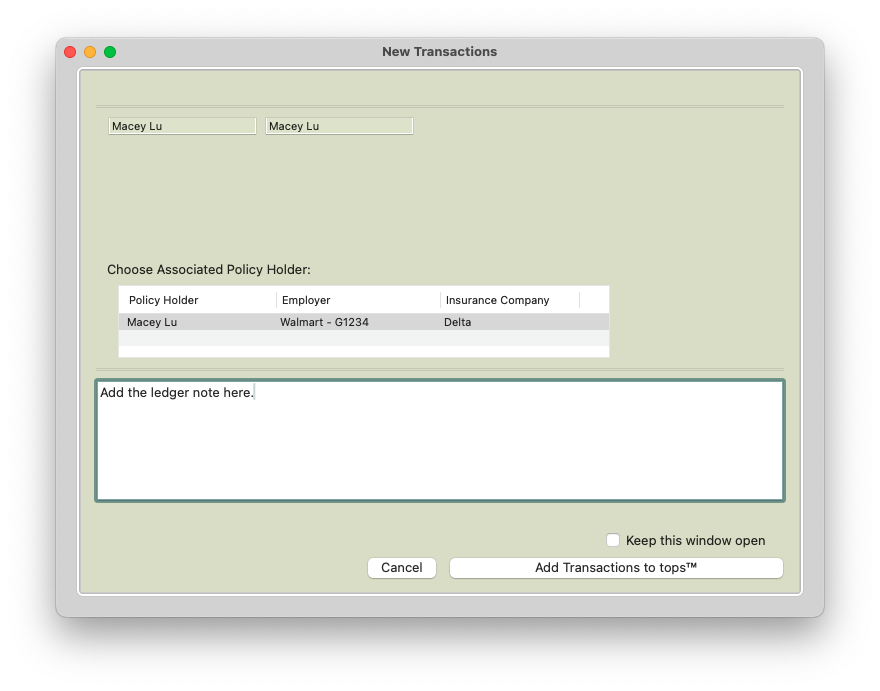
- Add the note and click Add Transactions to tops.
Viewing Insurance Payments on Patient Ledgers
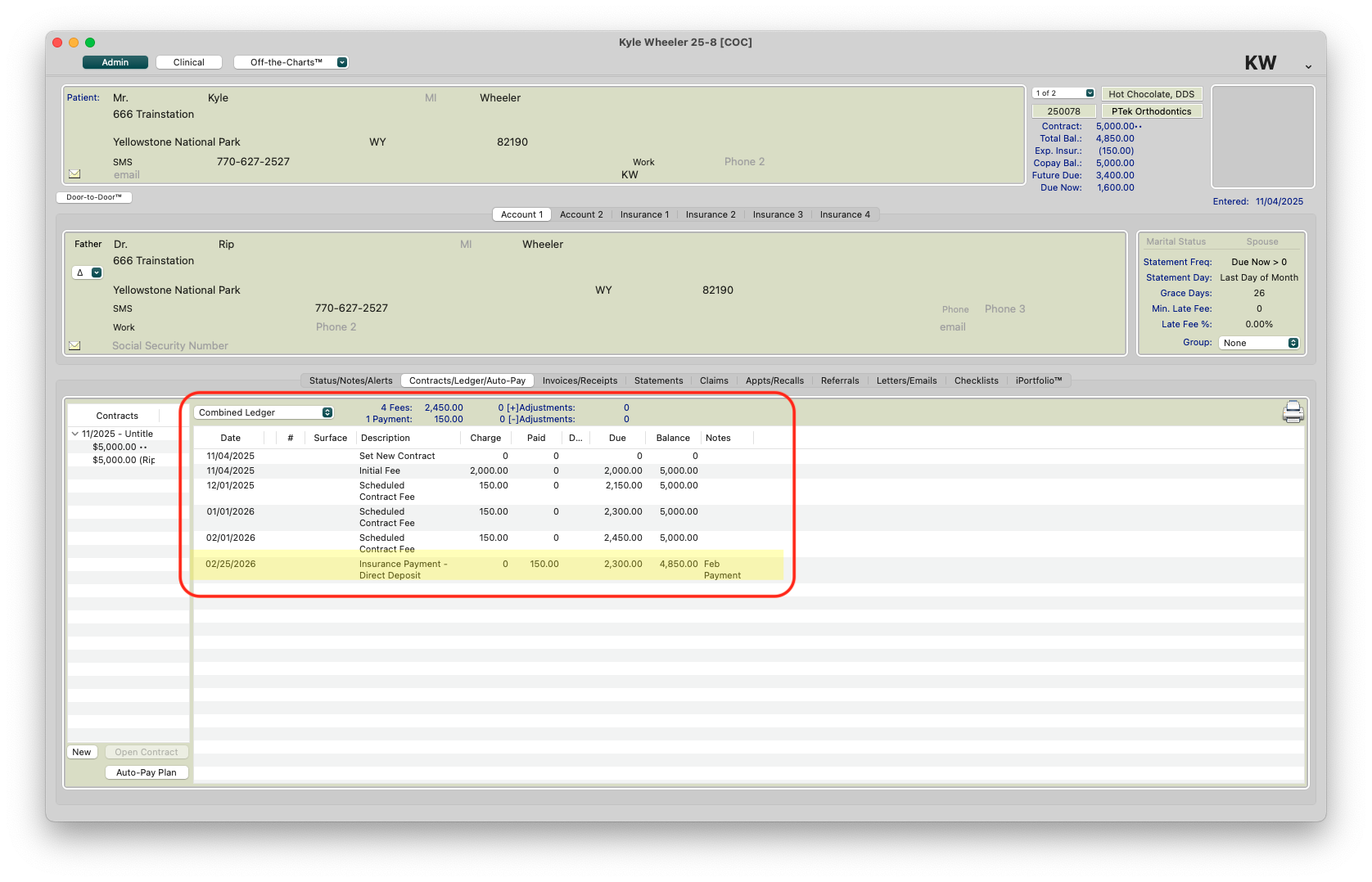
Combined Ledger
All insurance payments for a patient, regardless of which insurance ledger they were posted to, can be viewed by selecting the Combined Ledger in the patient’s Contracts/Ledgeres tab.
Insurance Ledger
All insurance payments for a patient associated with a specific insurance can be isolated by viewing the ledger associated with the specific insurance.